Category: SaaS MVP Development

  • Laravel vs Node.js for Building Scalable SaaS Development

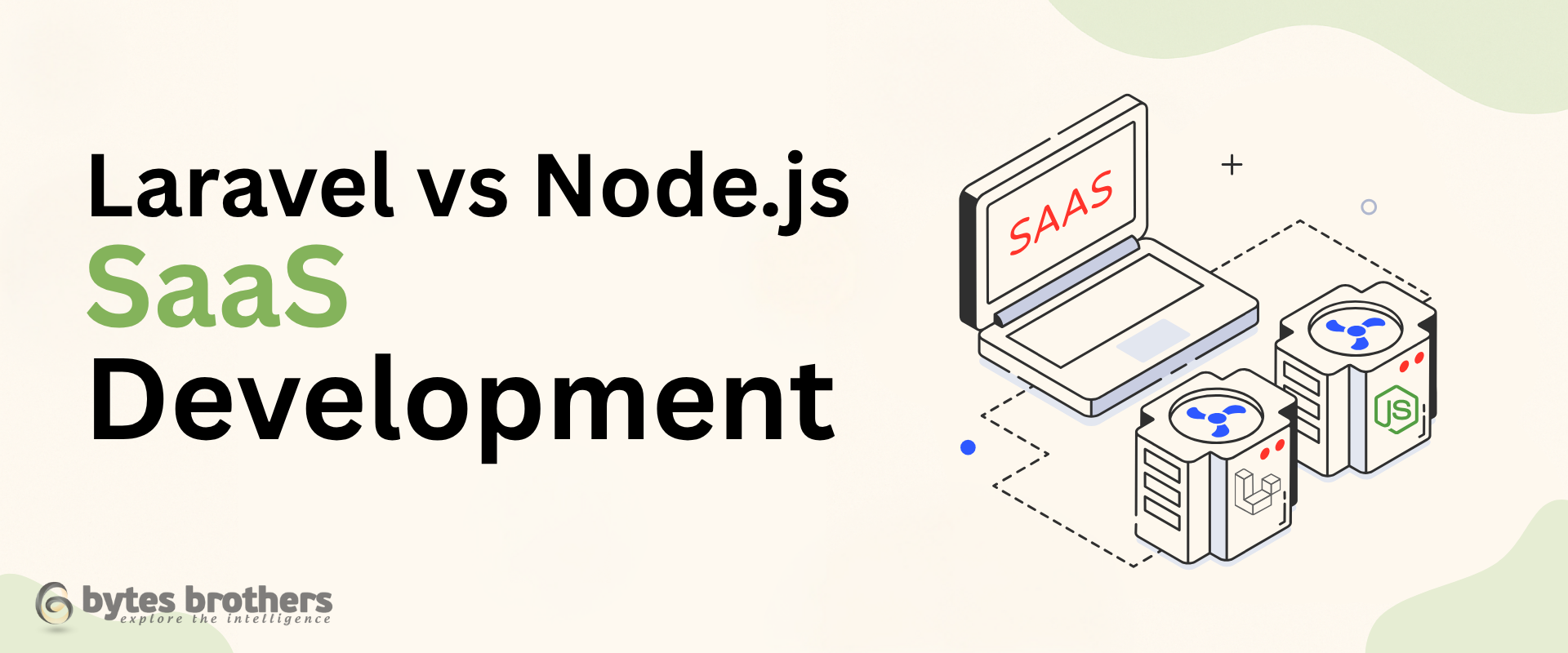
    Laravel vs Node.js for Building Scalable SaaS Development

    Choosing the right backend stack can make or break your SaaS product. In 2025, the debate between Laravel vs Node.js continues as these two heavyweight contenders dominate. But which is right for your startup?

    Key Takeaways

    • Understand the technical and business trade-offs between Laravel vs Node.js
    • Learn when the Laravel PHP framework offers speed, structure, and security advantages
    • Discover Node.js’s edge in real-time, event-driven applications
    • Explore real-world use cases for both stacks
    • Get expert guidance on which stack fits your SaaS goals

    Why Backend Stack Matters in SaaS

    Your backend architecture is more than code-it’s the foundation for scalability, performance, and long-term maintenance. The wrong choice can result in missed deadlines, scaling limitations, or even total rewrites.

    Whether you’re launching an MVP or scaling past Series A, selecting the right backend is a strategic decision-not just a technical one.

    Laravel: A Proven Foundation for Structured SaaS

    What Is Laravel?

    Laravel is a modern PHP framework designed to make web application development more elegant and efficient. It’s favored for projects where rapid development, built-in features, and a strong architectural foundation are essential.

    Laravel Advantages

    • Mature Ecosystem: Laravel Forge, Vapor, and Nova accelerate DevOps, hosting, and admin tooling.
    • Batteries-Included Philosophy: Built-in support for routing, ORM (Eloquent), migrations, queuing, and authentication.
    • Security-First Defaults: Out-of-the-box protections against SQL injection, XSS, and CSRF.
    • Elegant Syntax and Convention: Ideal for teams that want productivity without sacrificing code maintainability.

    When Laravel Works Best:

    • B2B SaaS platforms with dashboards and CRUD-heavy features
    • Startups prioritizing rapid MVP release with secure architecture
    • Teams familiar with PHP or migrating from WordPress-based environments

    Real-World Example:

    Laravel Spark is used by hundreds of startups to launch SaaS apps quickly. It includes billing (Stripe), user teams, invoicing, and subscription logic out-of-the-box.

    Node.js: Performance Meets Real-Time Interactivity

    What Is Node.js?

    Node.js is a server-side JavaScript runtime built on Chrome’s V8 engine. It’s event-driven, non-blocking, and ideal for building scalable applications-especially when concurrency or real-time features are key.

    Strengths of Node.js

    • Asynchronous & Non-Blocking I/O: Enables fast, scalable APIs for data-intensive apps.
    • Same Language Across Stack: JavaScript on both frontend (React/Vue) and backend reduces context switching.
    • Rich NPM Ecosystem: Thousands of packages and integrations for payments, real-time communication, and auth.
    • Excellent for Real-Time Apps: Chat, streaming, and collaboration tools shine here.

    When Node.js Works Best:

    • SaaS platforms with real-time data (collaborative editing, live metrics, chat)
    • APIs that need to handle high concurrency and throughput
    • Teams that are already JavaScript-heavy

    Real-World Example:

    Trello, a real-time task collaboration tool, uses Node.js to handle thousands of concurrent connections with low latency.

    Laravel vs Node.js: Comparison Breakdown

    Feature Laravel (PHP) Node.js (JavaScript)
    Language PHP (Laravel PHP framework) JavaScript (runtime)
    Architecture MVC (opinionated) Unopinionated, more manual setup
    Real-time Capability Limited (needs Laravel Echo, Pusher) Native support with WebSockets
    Ecosystem Tools Spark, Forge, Nova NPM, Express, NestJS, Socket.io
    Community Support Mature, especially in enterprise Huge open-source JS community
    Performance Great for CRUD, admin, API-first SaaS Better for concurrent I/O operations

    Key Decision Factors for Founders

    1. Team Experience

    If your developers are PHP-savvy, leveraging Laravel advantages will speed up development. If your team is full-stack JavaScript, Node.js offers continuity and faster iteration.

    2. Product Requirements

    Need real-time features like notifications, chat, or analytics dashboards? Node.js gives you an edge. Building a structured admin-heavy SaaS with user roles, billing, and content? Laravel simplifies the backend significantly.

    3. Long-Term Maintainability

    Laravel’s convention-over-configuration helps maintain code quality as teams scale. Node.js offers more flexibility-but demands architectural discipline to avoid technical debt.

    Conclusion: Choose What Aligns With Your Vision

    There is no universal winner in the Laravel vs Node.js debate. What matters is how each aligns with your product’s complexity, team strengths, and future roadmap.

    Need help deciding or building? Our team at Bytes Brothers has launched successful SaaS products on both stacks-from lean MVPs to enterprise-grade platforms.

    Explore our SaaS MVP Development Services to learn how we deliver SaaS products that scale.

    Start With Confidence. Build With Expertise.

    Get a Free Technical Consultation

    Let’s talk about your product idea, tech constraints, and roadmap. We’ll help you evaluate Laravel, Node.js, and beyond-so you launch faster and smarter.
    Schedule Your Consultation Today

  • MVP Development Process and Strategy for SaaS Startups (2025)

    MVP Development Process and Strategy for SaaS Startups (2025)

    Speed is survival in SaaS. A streamlined MVP development process can validate your product idea, attract early adopters, and unlock investor confidence-all in months, not years. Here’s how to plan your MVP timeline, phase by phase.

    Key Takeaways

    • Understand each stage of the MVP development process
    • Estimate accurate timelines for SaaS MVPs (from planning to launch)
    • Learn what technologies accelerate development in 2025
    • Avoid costly scope creep and tech debt
    • Know when to pivot, iterate, or scale

    What Is an MVP in SaaS?

    An MVP (Minimum Viable Product) is the leanest version of your software that delivers core value to users while minimizing build time. In SaaS, that typically means a web-based product with authentication, one core workflow, and basic analytics.

    Example: Dropbox’s original MVP was a demo video. Slack started as a basic internal chat tool. These MVPs solved one core need—well.

    The MVP Development Timeline: Phase by Phase

    Phase 1: Discovery and Validation (1–2 Weeks)

    This is the foundation of your MVP development strategy. Before coding starts, clarity is key.

    Deliverables:

    • Problem validation through user interviews
    • Competitor research and SWOT
    • Feature prioritization using MoSCoW or Kano models
    • Technical feasibility analysis
    • Product roadmap

    Tools to Use:

    • Figma (wireframes)
    • Trello or Notion (road mapping)
    • Typeform or Google Forms (user research)

    Phase 2: UX/UI Design (1–2 Weeks)

    Great design is not about beauty—it’s about usability. This stage translates strategy into screens.

    Key Activities:

    • Wireframing user flows (onboarding, dashboard, settings)
    • UI mockups with interactive prototypes
    • Mobile-first design if targeting cross-platform

    Tech stack: Figma, Adobe XD, Zeplin for developer handoff

    Phase 3: Core Development (3–5 Weeks)

    Now the build begins. The length of this phase depends on feature complexity and team size.

    Must-Have Features in a SaaS MVP:

    • User authentication
    • Core value delivery feature (e.g., dashboard, data sync, task flow)
    • Basic analytics and reporting
    • Payment integration (Stripe, Paddle)
    • Admin panel (optional but useful)

    Recommended Tech Stack (2025):

    • Frontend: React or Vue.js
    • Backend: Node.js or Laravel
    • Database: PostgreSQL or MongoDB
    • Hosting: AWS, Vercel, or DigitalOcean
    • Version Control & CI/CD: GitHub + GitHub Actions

    Phase 4: Testing & QA (1–2 Weeks)

    Testing isn’t just bug fixing. It’s your insurance against product failure.

    Key Areas:

    • Functional testing (unit + integration tests)
    • UI testing (cross-browser + device)
    • Performance testing under simulated traffic
    • Security basics (input validation, password hashing, HTTPS)

    Tools:

    • Jest, Postman, BrowserStack, Cypress, SonarQube

    Phase 5: Launch & Post-Launch Feedback (1–2 Weeks)

    The goal is not perfection. It’s speed-to-feedback. Launch to a private beta or early user group, collect input, and refine.

    Launch Essentials:

    • Staging and production environments
    • Mixpanel or PostHog for tracking
    • Intercom or Crisp for in-app chat
    • Clear onboarding + knowledge base

    Sample Timeline: 8-Week MVP Roadmap

    Phase Duration
    Discovery + Planning 1 week
    UX/UI Design 1–2 weeks
    Development (Core Build) 3–5 weeks
    QA & Pre-Launch Testing 1–2 weeks
    Launch + Iteration Ongoing

    Common Pitfalls in MVP Timelines

    1. Scope Creep

    Solution: Use strict feature prioritization frameworks. Your MVP is not your full product.

    2. Tech Overkill

    Solution: Choose tools that match team experience. Kubernetes is likely overkill for your MVP.

    3. Incomplete Validation

    Solution: Validate the problem, not the product, before writing code.

    4. Skipping QA

    Solution: Bugs erode trust fast. Even lean MVPs need QA time budgeted.

    From MVP to Growth: What’s Next?

    Post-launch, your priorities shift from “build fast” to “improve smart”. You’ll iterate based on usage data, user feedback, and emerging needs. This is where SaaS MVP development process evolves into long-term product development.

    Next Steps:

    • Build customer success flows
    • Roll out new features
    • Monitor performance and reliability
    • Plan for scalability

    Looking to take the next step? Learn more about our SaaS MVP Development Services built for fast-growing startups.

    Ready to Launch Your SaaS MVP?

    At Bytes Brothers, we specialize in helping startups validate, design, and build SaaS MVPs in as little as 8 weeks. Whether you’re seeking technical leadership, full-stack execution, or UX refinement, we’re ready to move fast—without cutting corners.

    Book a Free MVP Consultation Today

    –We’ll help you define your MVP scope, stack, and timeline—backed by real SaaS experience.

  • SaaS App Development: MVP Guide from Scratch (2025 Guide)

    SaaS App Development: MVP Guide from Scratch (2025 Guide)

    Launching a SaaS product in 2025 requires more than just a great idea-it takes precise planning, smart technology choices, and a clear development roadmap. This comprehensive SaaS app development guide will help you go from a concept to a fully functional product.

    Key Takeaways

    • Learn the end-to-end process of building a SaaS product from scratch
    • Understand the tools and technologies best suited for SaaS in 2025
    • Explore a proven framework for SaaS MVP development
    • Get clarity on costs, timelines, and common technical pitfalls
    • Connect with a trusted partner for SaaS app development at scale

    Understanding the SaaS Development Lifecycle

    What Is a SaaS App?

    A SaaS (Software-as-a-Service) application is a cloud-based platform that users access via a subscription. From CRMs like HubSpot to tools like Slack, the model offers scalability, predictable revenue, and faster go-to-market.

    Why founders love it: Lower upfront cost for users, recurring revenue for businesses, and faster deployment cycles.

    1. Define the Problem and Your Target User

    Every successful SaaS starts with solving a specific, high-impact problem.

    Step-by-Step:

    • Conduct problem interviews with at least 15 prospective customers
    • Use tools like Typeform, Maze, or Hotjar to gather early feedback
    • Validate willingness to pay using landing pages or mock demo videos

    Real-World Example:

    A logistics startup validated a need for real-time route optimization by surveying fleet managers across 10 mid-sized cities. The result? A clear path to building their MVP.

    2. Design a Lean and Validated MVP

    What is a SaaS MVP?

    A SaaS MVP (Minimum Viable Product) is the first functional version of your app with core features designed to validate demand and collect user feedback.

    Focus Areas:

    • Essential features only (authentication, core workflow, billing)
    • Mobile responsiveness and clean UX
    • Basic analytics (user activity, conversions)

    Recommended Stack for 2025:

    • Backend: Laravel, Node.js, or Django
    • Frontend: React or Vue.js
    • Cloud Hosting: AWS, Vercel, or DigitalOcean
    • Database: PostgreSQL or Firebase (for real-time updates)
    • Authentication: OAuth 2.0, Auth0, or Firebase Auth
    • Payments: Stripe or Paddle for seamless billing setup

    This MVP approach minimizes waste and allows for rapid feedback loops-crucial for SaaS App Development at scale.

    3. Architect for Scalability from Day One

    Even if you’re starting small, your architecture should anticipate growth.

    Tech Foundations:

      • Multi-tenant architecture (for managing many users/companies)
      • Modular codebases using microservices (if feature-heavy)
      • CI/CD pipelines using GitHub Actions, Bitbucket Pipelines, or CircleCI
      • Robust API layer to allow future integrations (REST or GraphQL)

    Tip: Don’t optimize for millions of users immediately. Focus on stability, clean code, and database performance.

    4. Build the SaaS MVP

    Once the MVP is designed and architected, it’s time to build.

    4-Phase Build Process:

    Sprint 0: Setup

    • Repo setup, CI/CD pipelines, staging environment
    • Cloud infrastructure provisioning (AWS/GCP)

    Sprint 1–2: Core Features

    • Authentication
    • Core functionality (e.g., dashboard, analytics, task manager)

    Sprint 3–4: Billing and Notifications

    • Payment gateway integration (Stripe)
    • Email & push notifications via SendGrid or Firebase Cloud Messaging

    Sprint 5: QA and Launch

    • Automated and manual testing
    • Monitor performance with tools like Sentry and New Relic

    5. Launch, Iterate, and Scale

    Launch Strategies:

    • Use Product Hunt, BetaList, and startup communities for exposure
    • Offer a limited-time freemium or founder pricing
    • Collect usage metrics with Mixpanel or PostHog

    Iterate Weekly:

    • Release small updates often
    • Run A/B tests on onboarding flows
    • Respond to support tickets directly (great early user insight)

    From MVP to scale: After launch, you can expand to full features, refine UX, and explore integrations. This is the true start of SaaS app development

    6. Common Pitfalls to Avoid

    • Overbuilding pre-launch: Avoid bloated features-focus on one core job
    • Ignoring security: Use role-based access controls and data encryption
    • Delaying user feedback: Launch early and talk to users often
    • No onboarding: SaaS users drop off fast if they can’t see value quickly

    Ready to Build Your SaaS Product?

    We help startups turn validated ideas into high-performing SaaS platforms. Our SaaS MVP development service is designed to get your product to market faster with the right features. Whether you’re prototyping or scaling your SaaS to thousands of users, our team delivers reliable, scalable, and secure results.

    Book a Free Consultation Today

    Let’s define your MVP roadmap, tech stack, and launch strategy-tailored to your business goals.

  • Next.js SaaS MVP: Launch in 4–8 Weeks (2026 Guide)

    Next.js SaaS MVP: Launch in 4–8 Weeks (2026 Guide)

    Key Takeaways:

    • Understand why Next.js is ideal for rapid SaaS MVP development
    • Learn how startups can validate ideas faster with a lean MVP approach
    • Discover real-world tools and workflows to accelerate your launch
    • Explore how BytesBrothers.com helps startups bring MVPs to life

    Why Choose Next.js for Your SaaS MVP?

    Startups aiming to validate ideas quickly and efficiently need a tech stack that delivers speed, performance, and scalability. Next.js, a React-based framework, stands out as a top choice for SaaS MVPs due to its server-side rendering, static site generation, and optimized development workflow.

    The Benefits of Using Next.js for SaaS MVPs

    1. Performance and SEO Out of the Box

    Next.js offers server-side rendering (SSR) and static site generation (SSG), making your MVP load faster and rank better on search engines. For startups, this means quicker feedback loops and better early visibility.
    2. Developer Efficiency

    Next.js includes features like built-in routing, API routes, and TypeScript support, which dramatically reduce the development time. With fewer dependencies to manage, your team can stay lean and focused.

    3. Scalable Architecture

    Whether you’re building a single-feature prototype or a complex SaaS product, Next.js scales with you. It works seamlessly with platforms like Vercel, Firebase, and AWS, making it easy to deploy and maintain.

    How to Fast-Track SaaS MVP Development with Next.js

    Step 1: Define the Core Problem and Features

    Focus on the single most valuable feature that solves a real user pain point. Avoid feature bloat. For example, if you’re building a CRM tool, prioritize lead tracking over advanced analytics.

    Step 2: Set Up the Next.js Project

    Use create-next-app to scaffold your MVP:
    npx create-next-app@latest my-saas-mvp

    This creates a minimal, production-ready boilerplate to start coding immediately.

    Step 3: Build the Core User Flows

    • Authentication: Use NextAuth.js for secure and scalable auth
    • UI Components: Integrate Tailwind CSS or ShadCN for rapid UI development
    • API Routes: Use built-in Next.js API routes for backend logic
    • Database: Connect to Supabase or PostgreSQL via Prisma ORM

    Step 4: Test with Real Users

    Deploy the MVP to Vercel or Render for fast, global hosting. Gather feedback using tools like Hotjar or FullStory. Iterate based on user insights, not assumptions.

    Real-World Example: SaaS MVP Built with Next.js

    A productivity startup approached BytesBrothers.com to build a task automation platform. Using Next.js MVP development principles, we:

      • Delivered a functional MVP in under 4 weeks
      • Integrated third-party APIs for task syncing
      • Used Supabase for authentication and storage
      • Scaled traffic handling with Vercel edge functions

    The client launched successfully, acquired 500+ beta users, and secured seed funding.

    Why Partner with BytesBrothers.com?

    Our team specializes in SaaS MVP development with Next.js, combining technical precision with startup agility. We’ve helped dozens of founders take their idea to market without overbuilding.

    Explore our SaaS MVP development services to see how we support startups across every stage of the product journey.

    Ready to Build Your Next.js SaaS MVP?

    Book a free consultation with our SaaS MVP experts. We’ll help you define the right scope, choose the ideal stack, and launch your product faster.

    Let’s turn your idea into a live MVP.

    Schedule Your Call Today

  • MVP Development for Startups Using CodeIgniter

    MVP Development for Startups Using CodeIgniter

    Key Takeaways:

    • Understand key steps for efficient MVP development for startups
    • Learn why CodeIgniter is ideal for lean MVPs with quick time-to-market
    • Discover how to leverage CodeIgniter rapid application development tools
    • See real-world MVPs launched using CodeIgniter
    • Explore our support for startup product teams

    Why CodeIgniter Is Ideal for MVP Development

    For early-stage startups, time and resource constraints are real. You need a framework that lets you test your core idea with minimal overhead. CodeIgniter offers an efficient path to building and launching MVPs fast, thanks to its lightweight structure, straightforward configuration, and built-in libraries.

    The Power of CodeIgniter for Lean MVPs

    1. Lightweight and Performance-Optimized

    CodeIgniter is known for its speed. With minimal installation and no reliance on complex dependencies, developers can start building immediately-critical for early validation.

    2. Simple and Scalable Architecture

    CodeIgniter uses a modular MVC approach, which keeps code organized and scalable. You can extend your MVP into a full product without major refactoring.

    3. Built-In Tools for Rapid Application Development

    Features like form validation, session management, and database abstraction allow startups to focus on product logic rather than low-level functionality.

    This makes CodeIgniter rapid application development an ideal path for startups trying to stay agile and lean.

    How to Build a Lean MVP with CodeIgniter

    Step 1: Define Your Startup’s Core Offering

    Every successful MVP starts with focus. Choose a single, high-impact feature that reflects your startup’s value. For instance, a fintech startup might begin with a simple budgeting dashboard rather than full financial tracking.

    Step 2: Set Up a CodeIgniter Environment

    Download the latest CodeIgniter version and configure your environment locally or via shared hosting. The framework runs well even in constrained server setups, which can save cost during early testing.

    Step 3: Implement Core Features

    Here’s a basic setup for common MVP needs:

    • User Authentication: Use CodeIgniter’s session library and Ion Auth package
    • Form Handling: Leverage CodeIgniter’s form helper and validation tools
    • Database Integration: Connect via CodeIgniter’s Query Builder or Active Record
    • RESTful APIs: Build API endpoints using custom controllers and routes

    Step 4: Test and Iterate Quickly

    Deploy your MVP using shared hosting, Cloudways, or DigitalOcean. Use feedback tools like Google Analytics or Crisp for user behavior insights. Iterate weekly to refine features.

    Real-World Example: CodeIgniter MVP Success

    A logistics startup partnered with BytesBrothers.com to develop a fleet management MVP. Using MVP development for startups best practices, we:

    • Built a driver check-in system with real-time location updates
    • Integrated Google Maps API and SMS notifications
    • Delivered a deployable MVP in 3.5 weeks
    • Supported the client through their pitch to angel investors

    The MVP helped them secure early funding and scale their operations to 200+ active users.

    Why BytesBrothers.com for CodeIgniter MVPs?

    We specialize in lean product development for startups. Our team uses CodeIgniter rapid application development to shorten timelines without sacrificing quality. From strategy to launch, we collaborate closely with founders to reduce risk and build with confidence.

    Explore our SaaS MVP development services to learn how we support tech-forward startups.

    Start Your CodeIgniter MVP with Confidence

    If you’re a founder or decision-maker looking to validate your product idea quickly, our team can help. We offer a free consultation to scope your MVP, identify the right tech stack, and get your product in users’ hands faster.

    Schedule Your Free MVP Consultation Today

    Let’s build lean and launch smart.

  • Laravel MVP Development for Startups: Launch Your Idea Faster

    Laravel MVP Development for Startups: Launch Your Idea Faster

    Key Takeaways:

      • Learn why Laravel MVP development for startups is ideal for fast and secure MVP delivery
      • Discover how to build scalable MVPs with Laravel’s ecosystem
      • Get a step-by-step breakdown of launching your MVP
      • See real startup success stories using Laravel
      • Understand how BytesBrothers.com supports founders end-to-end

    Why Laravel is a Strong Choice for Startup MVPs

    When speed, reliability, and scalability are essential, Laravel delivers. Its robust framework offers a clean syntax, powerful tools, and an extensive ecosystem that makes it perfect for early-stage startups needing to validate ideas quickly.

    With built-in support for routing, ORM (Eloquent), authentication, and testing, Laravel MVP development for startups significantly shortens the path from idea to live product.

    Benefits of Using Laravel for MVP Development

    1. Rapid Feature Development

    Laravel’s artisan CLI, built-in scaffolding, and package ecosystem (like Breeze, Jetstream, or Laravel Nova) speed up the development process dramatically.

    2. Secure and Scalable Out of the Box

    Laravel includes ready-made tools for input validation, CSRF protection, and authentication, ensuring security without manual setup. Plus, Laravel supports horizontal scaling with services like AWS, Forge, or Vapor.

    3. Active Ecosystem and Community

    Laravel has one of the most active open-source communities. This translates into well-maintained packages, quick troubleshooting, and access to ready-to-integrate features-saving time and budget.

    These qualities make it easy to build scalable MVPs with Laravel without over-engineering.

    Step-by-Step: Launching a Laravel MVP

    Step 1: Define Your Startup’s MVP Scope

    Identify the one feature that proves your product’s value. For instance, an edtech platform might start with course enrollment and progress tracking before expanding into content creation or gamification.

    Step 2: Set Up the Laravel Project

    Use Composer to create your project:

    composer create-project laravel/laravel my-mvp-app

    Then configure environment variables (via .env) for local and production use.

    Step 3: Implement Core MVP Features

    • Authentication: Use Laravel Breeze or Jetstream for user login and registration
    • Database: Utilize Eloquent ORM for clean and readable models
    • APIs: Build RESTful endpoints using Laravel Resource Controllers
    • Testing: Leverage Laravel’s built-in PHP Unit tools for confidence in every release

    Step 4: Iterate Based on Real User Feedback

    Host your MVP using services like Laravel Forge (for DigitalOcean or Linode) or Laravel Vapor (for AWS). Collect user insights via analytics tools and session replays (e.g., PostHog or Hotjar). Adjust features weekly based on data.

    Real-World Example: Startup Success with Laravel

    A healthcare SaaS startup approached BytesBrothers.com to build a HIPAA-compliant scheduling MVP. Leveraging Laravel MVP development for startups, we:

    • Built secure role-based access and encrypted messaging
    • Integrated Twilio for appointment reminders
    • Deployed to AWS using Laravel Vapor
    • Delivered a working MVP in under 5 weeks

    The product helped the client onboard 800+ users and secure a strategic partnership with a regional clinic network.

    Why Work with BytesBrothers.com?

    We specialize in helping startups build scalable MVPs with Laravel. Our agile process, Laravel expertise, and product strategy focus ensure that you not only launch fast-but launch smart.

    Explore our SaaS MVP development services to see how we help founders from prototype to product.

    Let’s Launch Your Laravel MVP-Fast

    Need to turn your startup idea into a market-ready MVP? Our Laravel specialists are ready to help.

    To clarify your vision, scope the right build, and get a realistic timeline.

    Book a Free Consultation With Us

    Talk to us today and launch your MVP faster-with confidence.

  • Launch Faster with Next JS SaaS Template

    Launch Faster with Next JS SaaS Template

    Looking to reduce your time-to-market? A Next JS SaaS template helps startup founders and decision-makers launch scalable products faster-with less risk, less overhead, and more efficiency.

    Key Takeaways

      • Speed Up Development with reusable components and optimized architecture
      • Reduce Technical Overhead using prebuilt Next.js SaaS templates and boilerplates
      • Focus on Product-Market Fit while skipping repetitive infrastructure setup
      • Easily Integrate Technologies like Tailwind CSS, Prisma, Stripe, and Auth

    BytesBrothers offers customizable SaaS boilerplate solutions with expert guidance

    Why Speed Matters in SaaS Launches

    In the early stages of any SaaS startup, time is capital. Every delay increases costs, adds market risk, and opens space for competitors. That’s why many startups now turn to solutions like a Next JS SaaS template pre-engineered codebases designed to handle the foundation, so your team can focus on innovation.

    Real-World Scenario

    Imagine a SaaS product founder building a subscription analytics dashboard. Instead of hiring a full-stack team to set up routing, authentication, and billing from scratch, they use a Next.js SaaS starter kit. Within days, they have a working MVP integrated with Stripe, Auth0, and a responsive UI.

    What Is a Next JS SaaS Template?

    A Next JS SaaS template is a pre-configured codebase built with Next.js, ideal for launching web-based products like dashboards, marketplaces, CRMs, or internal tools. These templates typically include:

      • File-based routing
      • Server-side rendering (SSR) and static site generation (SSG)
      • Authentication and RBAC
      • UI components with Tailwind CSS or shadcn/ui
      • Payment integrations (Stripe, Paddle)
      • Database ORM (Prisma, PlanetScale)

    Think of it as a SaaS infrastructure starter—no need to reinvent user signup flows or API logic.

    How a SaaS Boilerplate in Next.js Helps Founders

    Using a SaaS boilerplate (Next.js) does more than just cut dev time. It removes technical ambiguity and makes your roadmap clearer.

    Step-by-Step Benefits

    1. Accelerated MVP Delivery

    No need to build authentication, payments, or dashboards from scratch. Templates already come with:

    • OAuth and JWT-based auth flows
    • Payment hooks (e.g., Stripe Checkout or Webhooks)
    • Fully designed, responsive layouts

    2. Built-in Best Practices

    Templates include clean folder structure, API routes, and edge function support-engineered with scalability in mind.

    3. Modern Dev Stack Out-of-the-Box

    Most templates use modern libraries like:

    • Tailwind CSS for fast, scalable styling
    • Prisma for type-safe database access
    • Supabase or Firebase for backend-as-a-service options
    • Zod and React Hook Form for form validation

    4. Faster Team Onboarding

    Junior or contract developers can onboard in hours-not weeks-because of the modular, well-documented codebase.

    Comparing Starter Kits: What to Look For

    Not all Next.js SaaS starter kits are created equal. Here’s what to consider:

    Feature Why It Matters
    Tech Stack Should match your team’s skillset and project needs
    Documentation Reduces time spent debugging or reengineering
    Customization Easy to adapt without rewriting core logic
    Scalability Use of SSR/ISR and modular code ensures performance

    Popular Examples

    • ShipFast – A monetization-focused SaaS kit built with Stripe and Supabase
    • Bulletproof Next.js – TypeScript-first template with Auth and Prisma
    • BytesBrothers Custom Boilerplate – Tailored for long-term scalability, DevOps-ready, and fully documented

    When to Use a Template vs. Build From Scratch

    Use a Template If… Build From Scratch If…
    You need an MVP in under 4 weeks You have very unique technical needs
    Your core value isn’t in infrastructure You require niche backend logic
    You have limited development budget You have a dedicated full-stack team

    A Next JS SaaS template provides immense value to early-stage teams, especially when time and budget are tight.

    Get Strategic Support with BytesBrothers

    We specialize in customizable SaaS boilerplates (Next.js-based) designed for scale, security, and speed. Whether you need help customizing a starter kit or building enterprise-grade infrastructure, our experts are ready to help.

    To fast-track your SaaS journey.

    Book a free consultation today

    Also, explore our full Web Application Development Services for end-to-end technical solutions.

    Final Thought: The right tools, team, and template can reduce months of development to weeks. For startups focused on growth and product-market fit, using a Next.js SaaS starter kit isn’t just smart-it’s strategic.